
Airframe Ultra vs Rain World
Rain World is a 2D single-player survival platformer; Airframe Ultra is a 3D multiplayer-only battle-racer. The studio's own words call it "quite a HUGE jump". What carries over is worldbuilding density, discovery design and a deliberately antique look — not the gameplay.
Videocult made Rain World and then made Airframe Ultra, and the two games could not be more different. The developers say it themselves, in the 3 November announcement, and the sentence is the reason this comparison is worth a page:
"Now some of you might not know this, but our previous game was literally a retro indie 2d platformer. A big-ass 3D multiplayer racing game with character creation and lobbies and matchmaking and progression systems and stores and unlockables is quite a HUGE jump for us!!"
That is the studio describing its own discontinuity. Nothing about Rain World predicts this game, and that is the point.
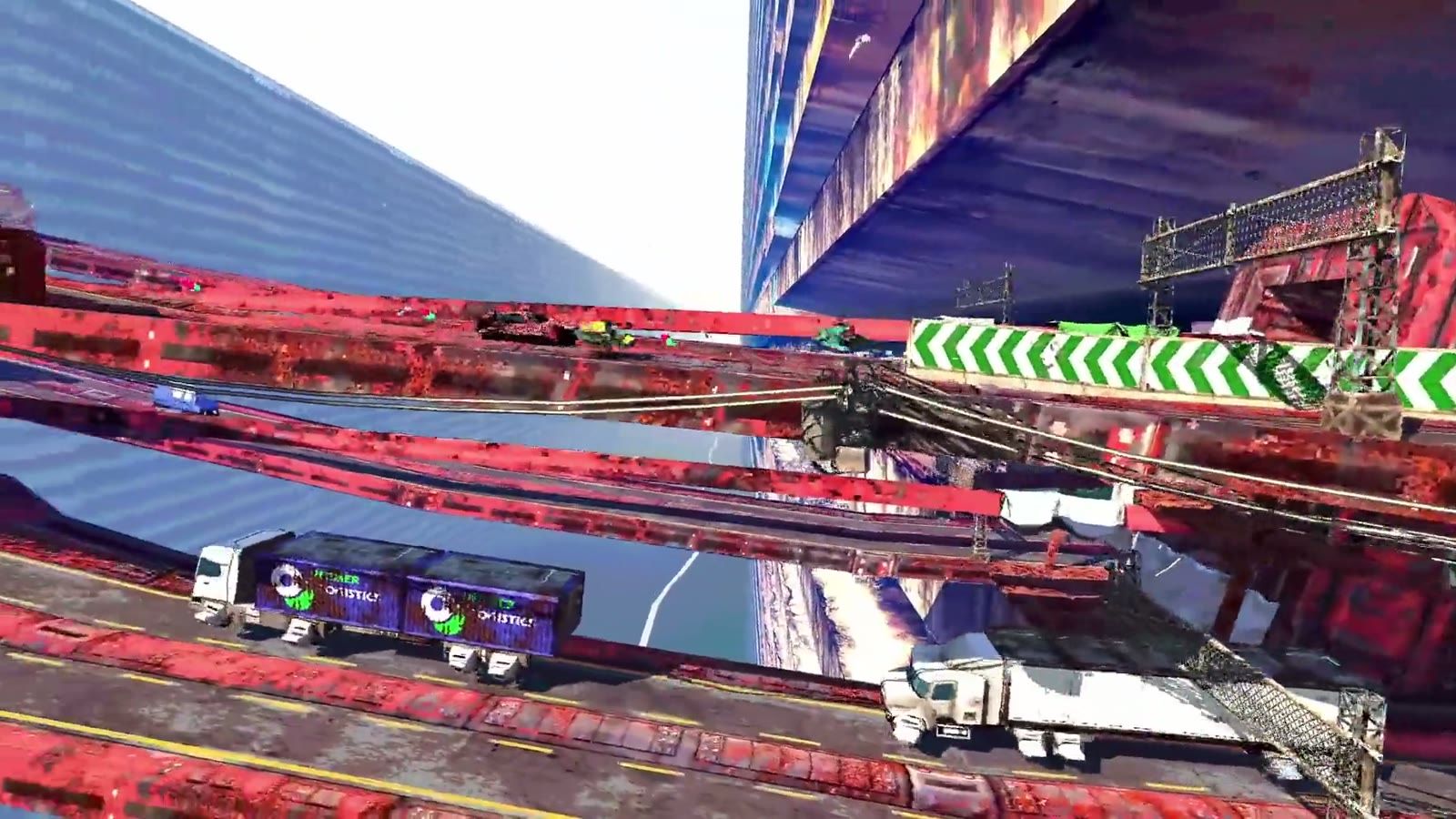
The two games side by side
| Rain World | Airframe Ultra | |
|---|---|---|
| Release | 2017 | 5 November 2026 |
| Genre | 2D survival platformer | 3D battle-racer |
| Players | Single-player | Multiplayer only (online and split-screen) |
| Camera | 2D side-on | Third-person, behind a hover-bike |
| Pacing | Slow, deliberate, punishing | Fast, chaotic, 200 km/h |
| Death | Frequent, punishing | Frequent, but cheap — you respawn into the same match |
| Tone | Melancholy, ecological | Melancholy, but loud |
| Commerce | Base game | Base game plus periodic expansions |
The "melancholy but loud" line is the honest answer to what the games share. Both are about a world that is running down and a small creature trying to survive in it; one does that quietly with a slugcat, the other with a hover-bike and a pipe.
What the studio kept
Three things carried over, and they are visible in how people talk about Airframe Ultra:
- The worldbuilding density. Rain World's ecosystem has rules and internal logic that players spent years documenting. Megacity West has a population-boom premise that explains why two of its maps are abandoned — that is Rain World's habit applied to a racer.
- The discovery design. Rain World famously does not explain itself. Airframe Ultra's Mastery Is Discovery pillar is the same instinct applied to a racing technique: "The game doesn't always hand you the answers."
- The art direction. Rain World's look was distinctive and slightly wrong on purpose. Airframe Ultra's PS1-grade "Lo-fi Cyberpunk" is the same willingness to look older than it is.
What the press says about the switch
Rock Paper Shotgun's 6 November piece does not compare the two games at all — it compares Airframe Ultra to G-Police and Wipeout 2097, which is the more useful reference for what the game actually is. The line that matters: it calls Megacity West "one of the prettiest PS1 cyberpunk burgs I've laid eyes on."
PlayGround.ru's 3 November launch piece frames the switch as a surprise and then explains it in business terms: a studio known for a meditative platformer making "a noisier, faster, and clearly multiplayer-oriented project", with priority given to a short path from menu to race.
Neither review treats the genre jump as a betrayal. Both treat it as the interesting thing about the release.
Why the comparison is useful if you are deciding
The practical question people actually have is "if I liked Rain World, will I like this?" The answer is structural: they share a design philosophy and nothing else.
| If you liked Rain World for | Airframe Ultra will |
|---|---|
| The ecosystem and the lore | Give you a city with a premise, not an ecosystem |
| The difficulty and the discovery | Give you hidden technique, not hidden geography |
| The loneliness | Give you a lobby full of strangers |
| The slow, careful pacing | Do the opposite |
| The art | Do something adjacent — era-appropriate rather than medium-appropriate |
If you liked Rain World for its systems, you will find Airframe Ultra interesting and not satisfying. If you liked it for its look and its refusal to tutorialise, this is the same studio doing the same thing in a louder room.
What Videocult says about the jump
The 3 November post is the primary source and it is short. Three claims worth quoting:
- The jump is "quite a HUGE jump for us".
- 1.0 is deliberately conservative: it "focuses on establishing the fundamentals of the game in a way that (we hope) will break in the fewest amount of ways".
- The plan after that is content "every quarter or so, until the game fills out all the crazy ideas we have in mind for the world".
That is a studio being honest about scope. It is also the reason the roadmap page exists — the plan is public and the gaps are acknowledged.
The other comparison people make
Steam hub threads from launch week include "How many of us played Jet Moto?" — the 1997 PS1 hover-bike racer. That is the right nostalgia reference for the game's feel, and it lines up with the G-Police and Wipeout comparisons from the press.
| Reference | Why it comes up |
|---|---|
| Jet Moto (1997) | Hover-bikes, PS1, racing with contact |
| G-Police (1997) | Dense cyberpunk city, flying vehicles |
| Wipeout 2097 | Speed, anti-gravity, electronic sound |
| Road Rash | Combat while racing |
| Oni (Bungie) | On-foot melee combos |
Five references, all of them from a specific era, none of them from Rain World. That is the clearest signal of what the game is actually doing: it is a 1997 game built in 2026, from the studio that made a 2017 game about a slugcat.