
How a circuit works
A circuit is three rounds. Each round pairs a forked sprint with a combat arena, and points bank across the whole circuit instead of resetting per finish. A launch-week review puts the win condition at 10 points plus first place in the final sprint.
A Circuit is the match format in Airframe Ultra, and in the release build it runs three rounds. PlayGround.ru's 3 November launch piece describes the released Circuit System as "из трёх раундов" — three rounds — that award points across a larger event rather than only for a single finish. Each round pairs a forked sprint with a combat arena, and the score you carry out of an arena is still on the board when the next sprint starts.
That structure is the reason the game does not play like a racer with guns bolted on: a strong sprint with a weak arena leaves you mid-table, and a strong arena cannot save a sprint where you finish last.
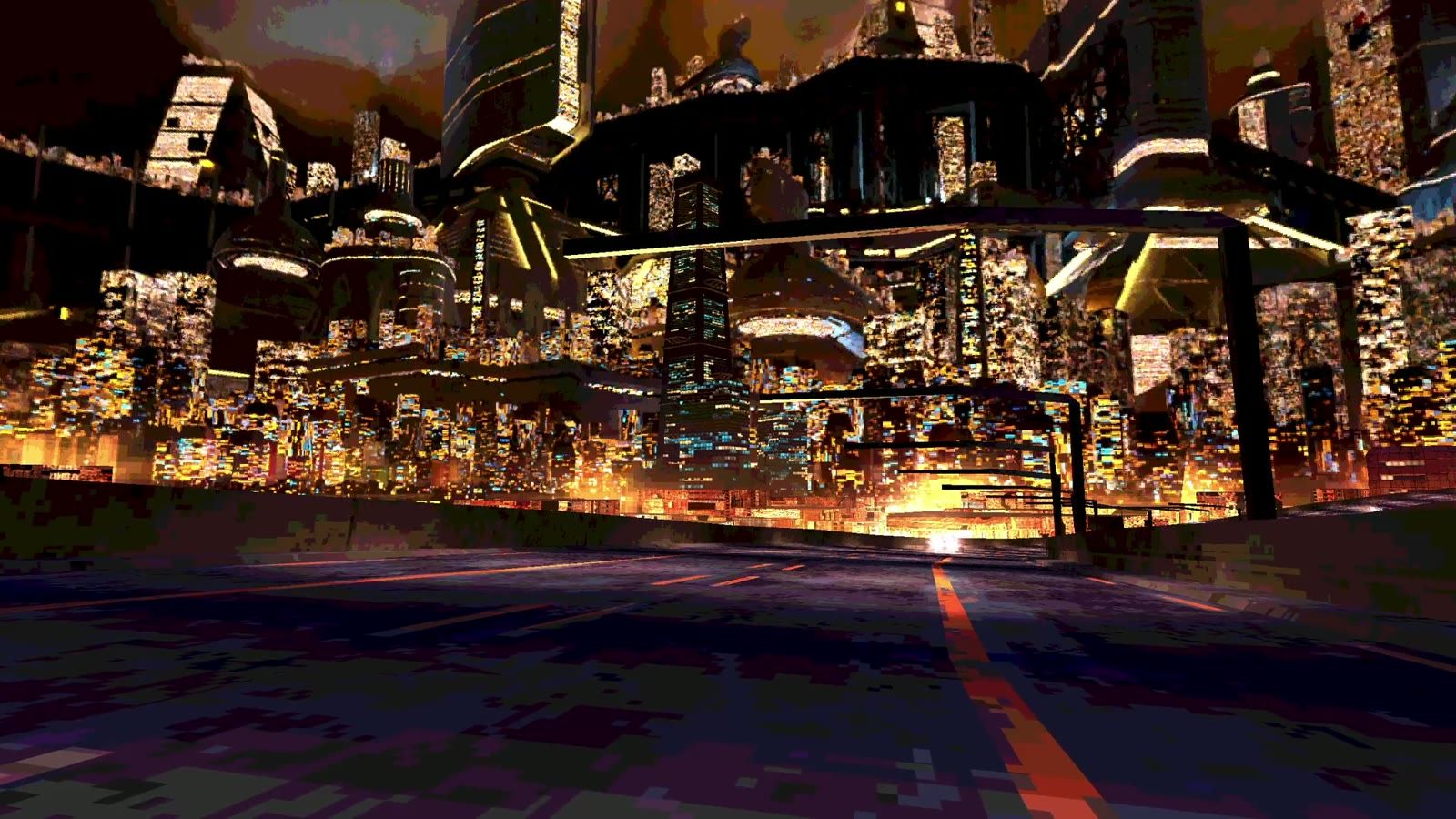
Round anatomy
| Round stage | What happens | What carries forward |
|---|---|---|
| Launch | The pack leaves the start line together | Nothing — score starts at zero |
| Sprint | Forked track; you hold a line, boost, grab money | Position and collected cash |
| Arena | Fighting starts; cash buys weapons | Kills, survival, cash spent |
| Round end | Points banked for the round | Points stay on the board |
| Next round | Sprint again, then arena again | Banked points |
| Circuit end | Final sprint, then result | Total across all rounds |
The alternating structure is easy to see in the official art: five bikes lined up on a starting straight is one screenshot, and a close-quarters arena exchange with a glowing weapon is the next.
Who wins
A launch-week review from PlayGround.ru states the win condition as reaching 10 points and taking first place in the final sprint. That is a media account of the released rule, not a line from the developers, so treat it as the working rule you will see in play rather than as gospel for every mode — the same piece calls the survival-race balance "спорный", arguing that whoever stacks money and lands the bigger weapon tends to close it out.
What is unambiguous from the official material is the design intent behind it. The 31 October devlog's pillar list includes Fast and Deadly: "A good racer should be able to win games. A good killer should be able to win games. You need to do both to be the best." The same post pushes back on the idea that racing and combat are separate games with a toggle between them — "it's combat plus racing, it's not either or."
Why three rounds instead of one race
Three rounds solve a specific problem: a single sprint is decided in the first corner by whoever gets clean air, and a single arena is decided by whoever found the best weapon first. Three rounds means one bad start can be recovered inside the same circuit, and it also means the money economy has time to matter — cash picked up in round one buys the weapon that decides round three.
The other reason is scoring. With points banked across rounds, the board is readable mid-circuit. You know whether you need to protect a lead or take a stupid risk, which is exactly the tension the pillar Fight for Bragging Rights is describing: "Take risks to win glory."
What the sprint asks of you
- Line choice. Tracks fork, so the fastest route is not always the safest one; the pack can cut you off on a merge.
- Boost discipline. PlayGround describes the hover-bike as handling "like a wild horse pumped with helium" and notes the boost button frequently ends in an explosion. That is a review's phrasing, but the practical advice holds: boost on exits, not entries.
- Money pickups. Cash is what buys the weapon in the arena, so a clean sprint that ignores pickups hands the next stage to somebody else.
- Airbrake. The advanced tech the team deliberately does not tutorialise. It is the difference between a corner you survive and a corner you carry speed through. See airbrake and advanced tech.
What the arena asks of you
The arena is where Fast and Deadly is enforced. You can fight on the bike or off it; the store description sells "pipes, chains and plasma torches", the event announcement mentions a katana in a track called Night Ride, and one review mentions miniguns. What matters mechanically is that arena time is where cash converts into an advantage you then carry into the next sprint.
| Resource | Earned in | Spent in | Effect on the circuit |
|---|---|---|---|
| Cash | Sprint pickups | Arena weapon purchases | Decides how the next fight goes |
| Position | Sprint | — | Points for the round |
| Kills | Arena | — | Points and survival |
| Stars | Whole career | — | Reputation, and harder lobbies |
Circuit versus career
A circuit is one match. A career is a sequence of them, and that is where the stars system and the garage live. The store description frames the ladder as "one circuit becomes two, two becomes ten" — the fantasy is that repetition turns a gutter kid into a name people chant.
The achievement percentages show how many players actually get that far: 59.5% have finished a first match, and 18.1% have completed five circuits. Whether that is a retention problem or just a small game finding its audience is a judgement call, but those are the public numbers.
Practical first-circuit checklist
- Do not boost into the first corner. Learn the fork before you learn the shortcut.
- Pick up money even when it costs you a place — the arena is where the place gets taken back.
- In the arena, buy early. A weapon in hand beats cash in the wallet.
- Watch the board between rounds. If you are leading, protect; if you are behind, force the fight.
- Stay for the final sprint. First place there is worth more than the points it pays.