
Megacity West lore
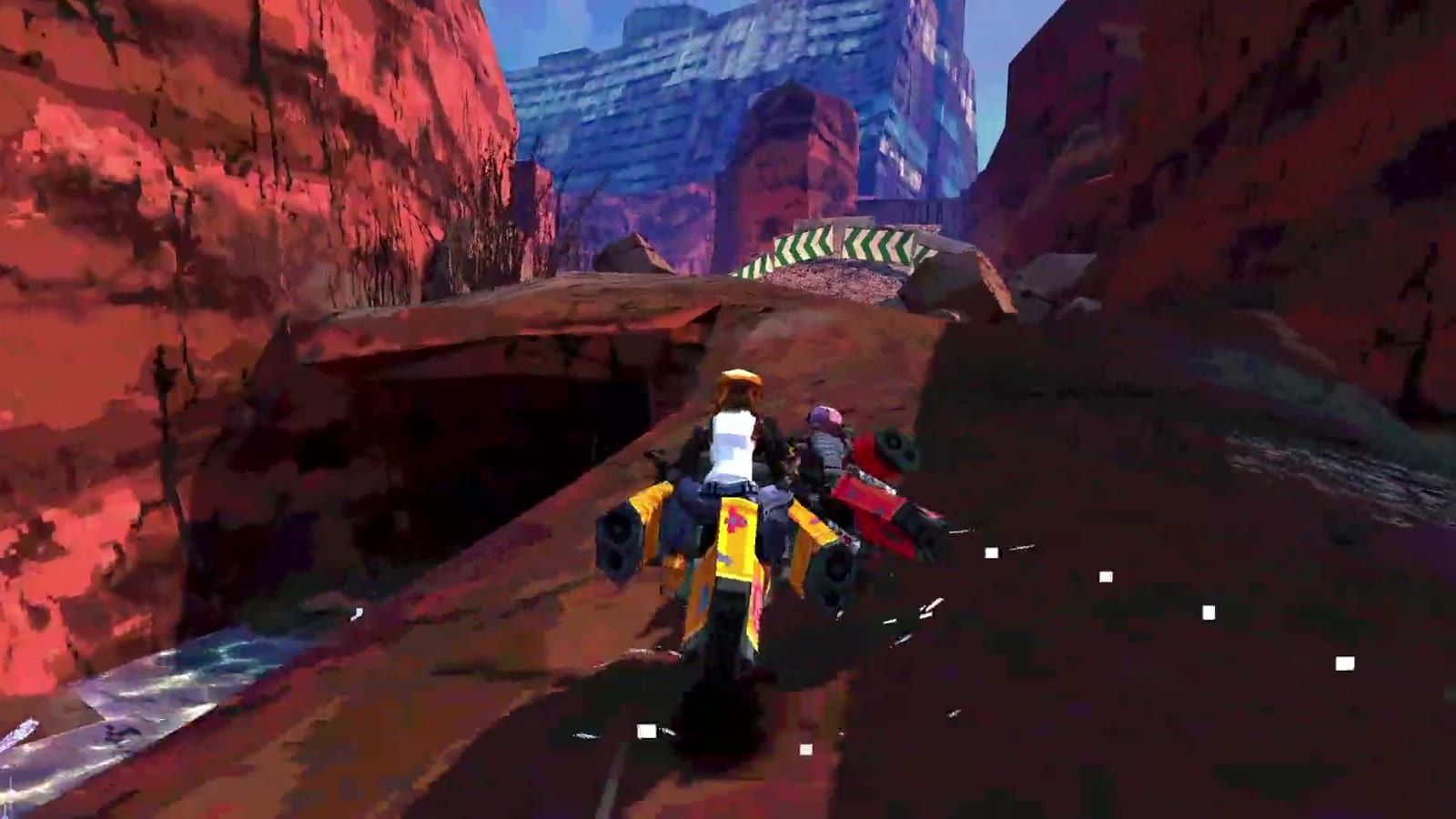
Megacity West is a coast-spanning city built during a population boom that never filled it. The store description names Slabtown, Vantac, Ysidro and the Texicali ZEGO zone; the October devlog adds that Quarry and Estate are entirely abandoned because the modern city has more arcology apartments than residents.
Megacity West is the setting of Airframe Ultra, and the developers have given it more internal logic than a battle-racer needs. The most quotable piece of worldbuilding is from the 31 October devlog, and it explains an entire design decision:
"Megacity West isn't entirely populated end to end with people. There was a population boom in its past that caused the insane buildout of this coast-spanning city, but the modern city doesn't have one resident for every single arcology apartment. That's why some maps (like Quarry and Estate) are entirely abandoned, where the city's old infrastructure is almost like geology."
That is the whole premise: a city built for a population that never arrived.
The four districts
The store description runs through them in one sentence, and it is the only official description of each:
| District | Official wording | What it implies |
|---|---|---|
| Slabtown | "the rusting shipyards of Slabtown" | Working-class industrial, container yards, cranes |
| Vantac | "the sleek 'scrapers in Vantac" | Corporate towers, glass, clean money |
| Ysidro | "the dune dens of the Ysidro edgelands" | Desert fringe, informal settlement, no infrastructure |
| Texicali ZEGO zone | "the hulking arcologies of the Texicali ZEGO zone" | Mass housing built for millions, mostly empty |
Two more places exist only in the fiction and the map list: Quarry and Estate, both described in the devlog as entirely abandoned.
The social premise
The store description's opening is a class statement rather than a setting note:
| Quote | What it establishes |
|---|---|
| "You are gutterborn. Squatters. Smugglers. Pickpockets. Thieves." | You start at the bottom, outside the law |
| "But with a second hand Airframe, a few custom mods, and a big heavy baseball bat you can become the one thing with freedom in a city of billions: A racer." | Racing is the only available mobility |
| "One circuit becomes two, two becomes ten, and all of a sudden street rats from Ellay to the Bay are chanting your name." | Fame is the substitute for money |
| "Infamy is its own reward." | The game is not promising you a way out |
"Ellay to the Bay" is the description's shorthand for the city's span — Los Angeles to the bay, in the real-world geography the fiction is built on. Megacity West is a California that kept building.
Why the city is empty
The devlog's population-boom explanation does two jobs at once:
- It justifies the track design. A combat racer needs space. An abandoned district gives you long straights, exposed edges and no traffic to model.
- It sets the tone. The official art is full of monumental infrastructure with nobody in it: shipping containers stacked for a port that is not busy, arcology towers with most windows dark.
That second job is the reason the game reads as melancholic despite being loud. It is a racing game about a place that is running down.
Three-feet-up
The store description's first line is the setting's best image: "Three feet above the blacktop lies another city. Its citizens are the desperate, the thrill-seeking, the dangerous and the mad. At this height, the legends of the street are made."
The hover height is a class marker. On the ground you are nobody; three feet up you are a racer. The description closes the loop later: "three feet above or six feet below" — the alternative to racing is being buried.
What the factions are not
There is no official faction system, no gang reputation meter, and no lore compendium in the game as shipped. Any site organising Megacity West into factions with ranks and rewards is extrapolating from names.
What exist are named places, a named circuit (the Ultra Circuit), and named people:
| Name | What it is |
|---|---|
| Ultra Circuit | The racing league the whole game is framed around |
| Bandit99 | A preset racer the developers reference; likely a beta-era character |
| James and Joar | The Videocult developers who front the announcements |
| Riv otter | The community-facing name that signs the announcement posts |
| Esteban | The artist behind the game's key art |
The lore's function in the design
The 31 October devlog connects worldbuilding directly to interface design: "We have this pillar for Airframe that we call 'Lo-fi Cyberpunk' and that really describes the kind of dilapidated future that Ultra Circuit racing takes place in. Finding cool ways to enhance that aesthetic (like with the race interface and UI) is pretty key to the way we want to develop Airframe."
So the HUD is lore. The dilapidated panels, the eroded chevrons, the pastel decay — those are the city's condition expressed as interface. It is also why the game looks like a PS1 title that survived into 2026, which is the single most-praised thing about it in the press.
Where to read the lore properly
There is no in-game codex worth pointing at, so the primary sources are the store description and the devlogs. The October devlog carries the population passage and the pillar list; the store page carries the district roll call.
The maps and tracks page covers which of these places you actually race in, and the reviews page collects what critics said about the world specifically — which, in most cases, is the most positive part of the review.